Valorant Champions Shanghai: what Day 7 of the group stage revealed
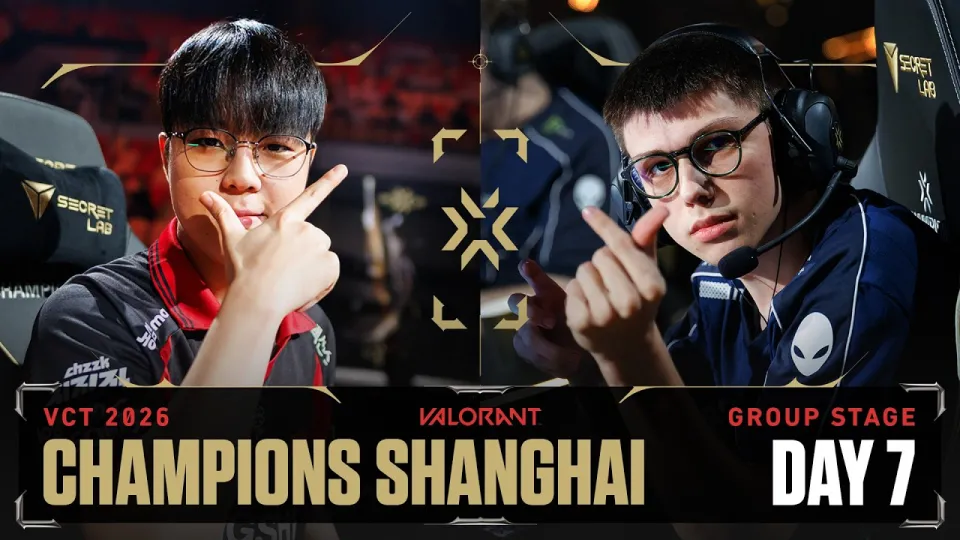
Video: VALORANT Champions Shanghai — Group Stage — Day 7
Want articles like this for your own video to promote it on YouTube and Google? Order them through the Telegram bot @sat_sit_bot. Articles with your video embedded are written and posted by the bot itself — on popular topical sites (no ads). Try it free: 50 articles on us.
· based on the channel VALORANT Champions Tour
Valorant Champions Shanghai is the final VCT event of the 2026 season, and Day 7 of the group stage narrowed the field before playoffs. Sixteen teams from Americas, CN, EMEA and Pacific are fighting for the world title in a tournament that runs from September 24 to October 18, and the Day 7 broadcast is available through the official VALORANT Esports X account, which posts schedules, results and clips around each match day.
The group stage matters more than usual this year. Two separate Masters events produced two different champions in 2026, which means Shanghai is the first LAN where both arrive with a trophy already in hand. Day 7 was the point where that depth stopped being a talking point and started showing up in the standings.
What the Day 7 broadcast actually covers
The Day 7 stream is a full match-day VOD, not a highlight reel, so it carries the whole rhythm of a group stage day: drafts, pistol rounds, save decisions, and the pauses in between. The VALORANT Champions Tour channel publishes these broadcasts unedited, which is why the runtime stretches well past the actual map time.
A few structural things worth knowing before you open the video:
- It is a multi-map block covering several series, so the scoreboard changes constantly and there is no single narrative arc.
- The chat's most-liked comment is a spoiler blocker with timestamps, which tells you the audience treats the VOD as something to watch later rather than live.
- Technical pauses appear repeatedly, and viewers flagged them as the defining feature of the day rather than any individual clutch.
- Because the stream is uncut, the analyst desk segments between maps carry real information about group standings and tiebreakers.
The tech pauses became the story of the day
Repeated technical pauses disrupted the flow of Day 7 more than any single match did. The comment section is dominated by remarks about an "endless series of tech pauses," and the spoiler-blocker comment itself notes that its timestamps may need editing because of them.
For a viewer watching the VOD, this has a practical consequence: the pause time inflates the runtime and breaks the momentum of close maps. A 5v4 retake that should read as one continuous sequence gets split by a five-minute freeze, and the tension drains out of it. If you are watching for improvement rather than entertainment, skip the pauses and treat each map as a separate study block.
For the tournament itself, pause clusters in a group stage usually point to one of three things: hardware or peripheral issues on stage, network instability at the venue, or server-side problems affecting a specific match server. The broadcast does not spell out which, and it is worth being careful about assuming a single cause for every stoppage.
Why China's teams are under scrutiny
The harshest comments under the Day 7 VOD target the Chinese representatives, and they are specific rather than generic. Viewers point to lost eco rounds, blown 5v2 advantages, and utility usage that collapses once a set play breaks down.
That criticism lands harder this year because of the regional context. The same comment thread argues that several teams from other regions were stronger than the entire CN field and still did not qualify for Champions. Whether or not you accept that framing, it identifies the real question hanging over the group stage: is the CN slot allocation producing the best sixteen teams, or the best sixteen teams by region?
There is a counter-argument worth holding alongside it. Group stage VALORANT compresses preparation — teams have days, not weeks, to build a map pool for a specific opponent — and a roster that looks lost on utility in a best-of-three can look completely different in a best-of-five with a week of prep. Day 7 is evidence, not a verdict.
How to watch the VOD efficiently
A full match-day broadcast is a poor format for learning, so treat it as a library rather than a film. The efficient approach:
- Watch the pistol rounds of every map first; they set the economy pattern for the half.
- Pick one team and follow only their defensive halves, pausing to note setup positions.
- Skip the pauses and the desk segments on the first pass, then return to the desk for tiebreaker context.
- Use the spoiler-blocker timestamps in the comments to jump between series instead of scrubbing.
One clip viewers singled out shows a Yoru clone creating a moment of confusion on a site hold — the kind of utility interaction that only reads clearly when you watch it twice.
The Masters champions and the Shanghai bracket
The premise of the 2026 season is that the old hierarchy cracked. Two Masters titles went to two different teams, and the broadcast framing is explicit about it: familiar names, new contenders, and a generation of challengers who are no longer waiting their turn.
That makes the group stage unusually informative. In previous years, a top seed could afford a sloppy map and still top its group on map differential. With this many teams capable of taking a series, map score becomes the tiebreaker that decides who avoids a stronger playoff opponent. Day 7 is where those margins start to matter — a 13-11 loss costs the same as a 13-3 loss in the standings but not in the round differential that separates second from third.
The individual names in the chat, like the calls for one veteran player to run for president, are a reminder that star power still drives attention. But the results in Shanghai are being decided by depth: five players who can all trade, and a coaching staff that can rebuild a default mid-series.
Common viewer questions about the format
Most confusion around Day 7 is not about the gameplay but about what the group stage is actually deciding. The short version: sixteen teams play through groups, and the surviving teams move into a playoff bracket where seeding determines how quickly you meet a Masters champion.
A second recurring question is about the broadcast itself — why it is so long, why pauses are not cut, and why the channel uploads full days instead of condensed recaps. The answer is that the VOD serves as the official record of the match day; condensed highlights are published separately.
A third is regional strength. The argument that other regions had better teams than some CN qualifiers is not something the broadcast resolves, and it will only be settled by how far the Chinese teams go in the bracket.
Useful links
- VALORANT Esports on X — schedules, results and clips
- VALORANT Esports on Facebook
- VALORANT Esports on Instagram
- VALORANT Esports on TikTok
- VALORANT on Twitch
Bottom line
Day 7 of the Valorant Champions Shanghai group stage is best understood as a pressure test rather than a showcase: the tech pauses broke the rhythm, and the CN teams' economy and utility discipline came under open criticism from the audience. The bigger story is structural — with two different Masters champions in 2026, the group stage now decides seeding between teams that can all win a series. Watch the VOD for the pistol rounds and the defensive setups, and skip the downtime. The full match-day broadcast comes from the VALORANT Champions Tour channel, which publishes every day of the event, and following VALORANT Esports on X is the fastest way to catch results and schedule changes before the next match day.
Key takeaways
- VALORANT Champions Shanghai runs September 24 to October 18, with 16 teams from Americas, CN, EMEA and Pacific.
- Day 7 of the group stage was broadcast by the VALORANT Champions Tour channel and drew attention mostly for repeated technical pauses.
- Two different teams won Masters events in 2026, so Shanghai is the first LAN where both arrive as proven champions.
- Chinese teams drew heavy criticism from viewers for losing eco rounds and 5v2 situations and for rigid utility usage.
- Viewers also argued that stronger teams from other regions missed Champions entirely, questioning the CN slot allocation.
Source: VALORANT Champions Shanghai — Group Stage — Day 7 · Markdown version
Questions & answers
What is the VALORANT Champions Shanghai format?
Sixteen teams from Americas, CN, EMEA and Pacific compete in a group stage before moving into a playoff bracket. The event runs from September 24 to October 18, and group placement determines playoff seeding, so map and round differential matter even in losses.
Why were there so many technical pauses on Day 7?
The broadcast shows repeated stoppages but does not state a single cause. Pause clusters at a LAN typically come from hardware or peripheral problems on stage, venue network issues, or server-side faults affecting a specific match. Each stoppage should be treated as its own incident rather than one systemic failure.
Are the Chinese teams really the weakest at the event?
Viewers point to lost eco rounds, blown 5v2s and rigid utility usage, and argue that stronger teams from other regions missed qualification. That is a fair criticism of specific rounds, but a group stage best-of-three is a small sample, and the bracket is where the argument gets settled.
How should I watch a full match-day VOD?
Treat it as a library, not a film. Start with the pistol rounds of each map, follow one team's defensive halves, skip the pauses, and use the timestamp comments to jump between series. Return to the analyst desk segments for tiebreaker context.